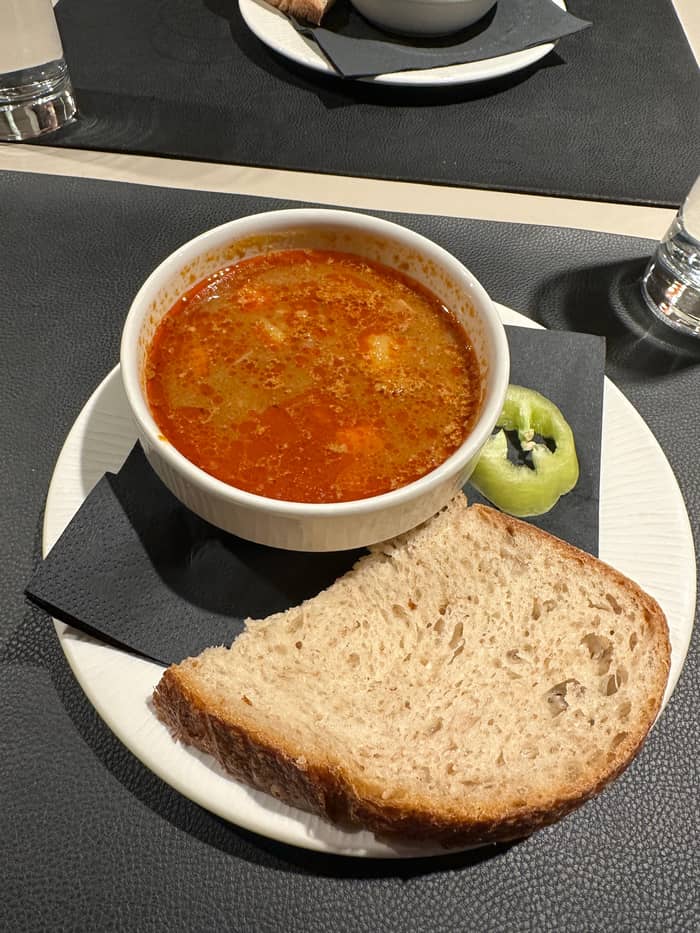
Most reviewed
Jewish Quarter walk
This site's tour
- Length2.5 hours
- Drinks3 or alcohol-free
- RouteQuarter and Andrássy
Guides
Language
Currency
See availabilitystarting at €57 · free cancellationMap your stop
Food walk through the Jewish Quarter, 3 drinks
★ 4.8 · 1,408 guest ratings
Fast answer
The famous street food in Budapest's Jewish Quarter is lángos, chimney cake and soup in a cup from Kazinczy utca's courtyards, eaten between ruin bars such as Szimpla Kert.
Plan around
Browse 22 stops
Select a route, then press a pin or stop to read its note and open Google Maps.
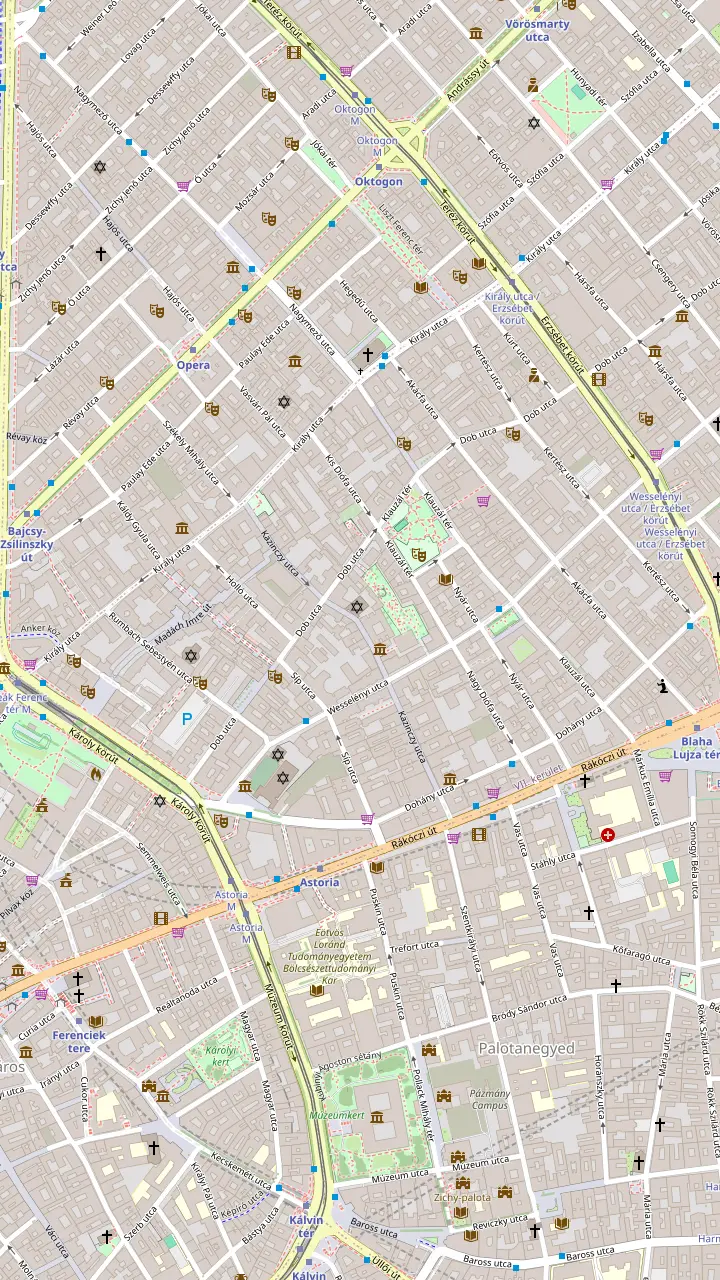
The most famous ruin bar, lively from the afternoon; a producers' market on Sunday mornings.
Google MapsA street-food courtyard at 18 Kazinczy utca with several stalls.
Google MapsBars and restaurants at the heart of the nightlife district, busy until dawn.
Google MapsA historic market hall with lángos on the gallery level.
Google MapsThe great synagogue on Dohány utca, a landmark of the Seventh District.
Google MapsKosher groceries at Dohány utca 26, open every day except Saturday.
Google MapsHungarian and Jewish one-pot dishes; book ahead.
Google MapsAn étkezde canteen serving stews, paprikash chicken and cholent.
Google Maps
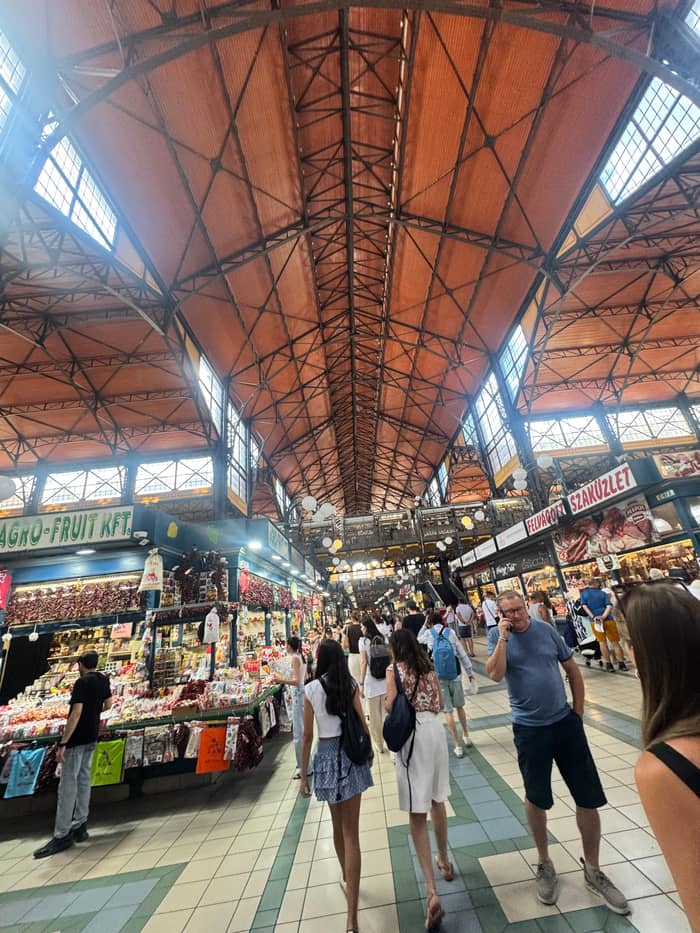
The biggest indoor market in Budapest: produce on the ground floor, counters on the gallery; open Mon-Fri 06.00-18.00, Sat 06.00-16.00, Sun 10.00-16.00.
Google MapsMetro M4 and trams 47, 47B, 48, 49 and 2 stop in front of the hall.
Google MapsA neighbourhood hall: Mon 06.00-16.00, Tue-Fri 06.00-18.00, Sat 06.00-13.00, closed Sunday.
Google MapsA Buda-side hall by the M2 and H5 stops; each stall sets its own hours.
Google MapsOne of the market halls the tourism agency names for lángos.
Google MapsA Buda market known for seasonal produce such as forest mushrooms.
Google Maps
The café and confectionery on Vörösmarty tér, opened in 1858; no reservations.
Google MapsThe café where Nyugat magazine was founded in 1908.
Google MapsThe gilded café on the Grand Boulevard; quietest between 7 and 9 AM and after 10 PM.
Google MapsBegun as Little-Gerbeaud, still a favourite of the theatre world.
Google MapsA food hall in the Corvin Palace with eleven restaurants and seats for up to 800.
Google MapsA bistro near the Parliament with a classic Hungarian menu.
Google MapsA neighbourhood restaurant in Újlipótváros where locals and regulars eat.
Google MapsA literary café on Bartók Béla út, reopened in 2010.
Google Maps© OpenStreetMap contributors, map data
The famous street food in Budapest and its ruin bars share the same few streets of the old Jewish Quarter. Here is where to graze, what to order, which Jewish dishes to look for and how to plan a night there.
Editorial team, budapestfoodtour.click · Updated November 8, 2026 · Takes 8 min
Summary view
A ruin bar is a bar set up inside a run-down old building, with mismatched furniture, odd art and courtyards open to the sky. The tourism agency calls them creative, eclectic venues that first became famous in Budapest and then legendary across Europe.7 The movement started on Kazinczy utca, one of the narrow streets of the Jewish Quarter, and that street is still its heart.1 Walk it after dark and you will hear the bars before you see them.
Szimpla Kert, on Kazinczy Street, is the most famous of them, and the tourism agency notes that it comes alive from the afternoon onwards.2 It is also one of the oldest ruin bars in the city.8 Inside, rooms of junk-shop chairs and painted walls open onto a courtyard, and every corner has a bar of its own. Come once in daylight to see the decoration, then again at night to see it full.
Ruin bars are mostly about drinks and atmosphere, but food is part of the night. Many have a kitchen or a stall, and the streets around them are packed with places to eat, which is why a ruin bar evening and a street-food crawl fit so well together. Eat first, drink slowly and alternate, and the Seventh District becomes one long, moveable dinner.
Where to go
| Place | What it is | Best time |
|---|---|---|
| Szimpla Kert | The famous ruin bar | Afternoon on |
| Szimpla market | Producers' market | Sunday morning |
| Karaván | Street-food courtyard | Evening |
| Gozsdu Courtyard | Bars and restaurants | Late night |
| Klauzál tér hall | Market hall with lángos | Daytime |
| Kosher market | Kosher groceries | Not Saturday |
Places and times as the Hungarian Tourism Agency describes them.2,11,3,6,15,14
Szimpla has a second life on Sunday mornings. The tourism agency writes that on Sundays, during the day, the bar hosts a small producers' market and a charity kitchen.8 It lists the market from 9 a.m. to 2 p.m., which makes it a good start to a slow Sunday.11 The choice is smaller than at a market hall, but the quality is high and the setting is unlike any other market in the city.
At weekends the bar also sells Hungarian designer goods and local delicacies, so you can leave with a jar of something good as well as a hangover cure.12 Come early, buy bread, cheese or honey from the stalls, and eat at the bar's tables while the courtyard is still quiet. It is the same building you saw the night before, almost unrecognisable in morning light.
Sunday matters here for another reason: the Jewish Sabbath runs from Friday sunset to Saturday sunset, and kosher businesses close for it.13 The kosher market on Dohány utca, at number 26, for example, closes only on Saturday.14 Plan kosher meals and shopping for Sunday to Friday, and leave Saturday for the bars, the courtyards and the cafés that keep their usual hours.
How long they last
Lengths as the listings give them; the cuisine and culture walk caps its group at 8.
To build your own Budapest street food tour, begin at the Karaván courtyard, 18 Kazinczy utca, where several stalls share one yard.3 The tourism agency lists a burger stall with vegan burgers, a hummus bar and Italian and Mexican food, and says to try the Hungarian-style chicken nuggets and the chimney cake.3,19 It works like an open-air food court: order from different stalls and eat together at the shared tables.
The small gastro bars along Kazinczy utca sell food to take away between the pubs and clubs, including a hearty soup in a cup and sandwiches made with carefully chosen ingredients.20 A cup of soup is the local answer to a late-night kebab, and it is warming on a cold evening. Look for a short board of the day's soups by the door and order whatever has just been made.
Gozsdu Courtyard is the bigger, busier passage. It sits at the heart of the nightlife district, and you can have breakfast, lunch and dinner there.21 After dark it fills with bars and DJs, and the atmosphere lasts until dawn.6 The Klauzál tér market hall nearby is the daytime counterpart, with fresh produce downstairs and lángos on the gallery level.15 Between them, you can eat around the clock without leaving the district.
Pick your night
Pick by hunger, by budget and by bedtime.
If I want to eat cheaply and well
Karaván courtyard
Several stalls share one yard at 18 Kazinczy utca.3
If I want the classic ruin bar
Szimpla Kert
The most famous ruin bar, lively from the afternoon.2
If I want Jewish home cooking
A cholent lunch
Kádár Étkezde serves cholent as the district's signature dish.16
If I keep kosher
Carmel or Hanna Garden
If I want food and drinks explained
A guided food walk
This site's tour pairs a set menu with 3 drinks.
Go with a guide
Most reviewed
This site's tour
Sweet finish
Bites and sweet wine
Small group
Jewish cooking in depth
Lángos is the first stop. The deep-fried flatbread is soft inside, crisp outside, and traditionally topped with sour cream, garlic and cheese.44,45 It fries in about a minute in very hot oil, so the best ones come straight from the fryer to your hand.43 Newer bars around Dob utca make updated versions with other toppings, and the tourism agency points to Dob utca by name as one of the spots for it.28
Chimney cake is the sweet one, and it smells better than it looks. The dough is wound around a cylinder, rolled in sugar and baked until the coating caramelises, then finished with cinnamon or ground walnuts.46 The Hungarikum Committee calls it Hungarian and Transylvanian at the same time, and one of the first written recipes dates from 1784.47 Eat it by unwinding the spiral, strip by strip, while it is still warm.
Look out for potato pancakes too. Made from grated potato and fried like lángos, they go by about 70 different names, tócsni and lapcsánka among them, and are usually eaten with sour cream.48 Butchers' counters add a fried sausage, black pudding or liverwurst with sourdough pickles.49 These are the snacks Hungarians grew up with, and they cost far less than a sit-down meal in the same street.
Price your night
Set your group size and compare guided ways to eat through the quarter.
Side-by-side: 3 options
Set your group size and compare guided ways to eat through the quarter.
≈
View≈
View≈
ViewAll amounts are from-prices on GetYourGuide, converted at the ECB reference rate. Exact prices are shown at booking.
A night in the quarter
The Seventh District is the city's old Jewish Quarter, and its food still shows it. The tourism agency names matzah soup dumplings, cholent, the slow-cooked Jewish stew, and challah bread as dishes that tell you about the traditions behind them.4 Cholent, sólet in Hungarian, is the one to order: beans, grains and meat cooked for hours. Kádár Étkezde serves it as the district's signature dish.16 If you are looking for a Jewish food tour in Budapest, ask whether cholent is on the menu before you book.
For something sweet, flódni is the cake to find. It is a Hungarian Jewish layered pastry, and the tourism agency sends readers to the Semes kosher bakery for it, along with haman's bags.5 Semes bakes without milk, which is part of what makes it kosher and also suits anyone avoiding dairy.50 Its pastries are also sold at the kosher market and the Kosher Deli on Síp utca, which has a restaurant upstairs and a takeaway café and grocery on the ground floor.51
Kosher rules shape the menus. Meat and dairy are never eaten together, and the rules call for a wait of at least 3-6 hours between them.52 That is why some kosher places lean towards dairy: Tel Aviv Cafe focuses on milky dishes, most of them vegetarian with a few fish plates.53 Carmel on Kazinczy utca serves a glatt kosher menu, and its Sabbath dinner offers challah, soup with matzah dumplings, Israeli salads and beefsteak, paid for in advance.17,54,55
Video
Stuffed Cabbage Adventures on YouTube · The video waits until you tap play to load.
these creative, eclectic venues began their rise to fame in Budapest before becoming legendary across Europe
Before you head out
The ruin bars pour everything, but a few drinks are worth asking for by name. Pálinka is the fruit spirit Hungarians are proudest of, and its official definition says it must be mashed, fermented, distilled, aged and bottled in Hungary, from fruit rather than concentrates or dried fruit.10 Order a small measure of plum or apricot and sip it slowly. It is strong, and it is meant to taste of the fruit.
Beer has come a long way. The tourism agency describes a true renaissance of craft beer in Hungary, with local breweries pouring experimental beers in pubs and craft bars, where you may even meet the brewer.9 Unicum, the dark herbal liqueur created in 1790 by János Zwack, physician to the imperial court, is the other classic you will see on every back bar.56 It is bitter and divisive, so try a sip before you commit to a glass.
A ruin bar crawl is easy to overdo, so pace it with food. This site's tour pours 3 drinks along the way, a wine, a beer and a shot, swapped for soft drinks if you ask, across a 2.5-hour walk with a fixed menu. That rhythm, a plate then a glass, is the right one for the whole evening. Drink water between rounds, and finish with a cup of soup on Kazinczy utca rather than one more shot.
A good evening here has three acts. Start with food in daylight or early evening, when the eateries are calm and the dishes fresh. Move to Szimpla or a quieter bar for a drink as the courtyards fill. Finish in Gozsdu Courtyard, where bars and DJs keep going until dawn.6 Wear comfortable shoes: the district is compact, but you will walk more than you expect.
Safety is rarely a worry. The tourism agency calls Budapest a very safe city and notes that Hungary ranked 15th among 163 countries in the Global Peace Index review.57 The usual city care applies on busy nights: keep your phone and wallet close in crowded bars, agree on a meeting point with friends and use licensed taxis. Many streets here are residential, so keep the noise down when you leave a bar late.
Prefer someone who knows the way? A ruin bar tour with local drinks and street food is the easiest way in. This site's tour walks the Jewish Quarter for 2 hours and Andrássy Avenue for 30 minutes, with a set menu and drinks, and costs from €57. The street food walk with sweet wine begins and finishes outside the Kazinczy Street Synagogue and takes 2.5 hours. For a deeper look at Jewish cooking, there is a 4-hour walk on cuisine and culture that takes no more than 8 guests.
FAQ
The tourism agency calls Budapest very safe, citing Hungary's 15th place in the Global Peace Index.57
Sources
Hungry for Budapest? Ask a real person here.